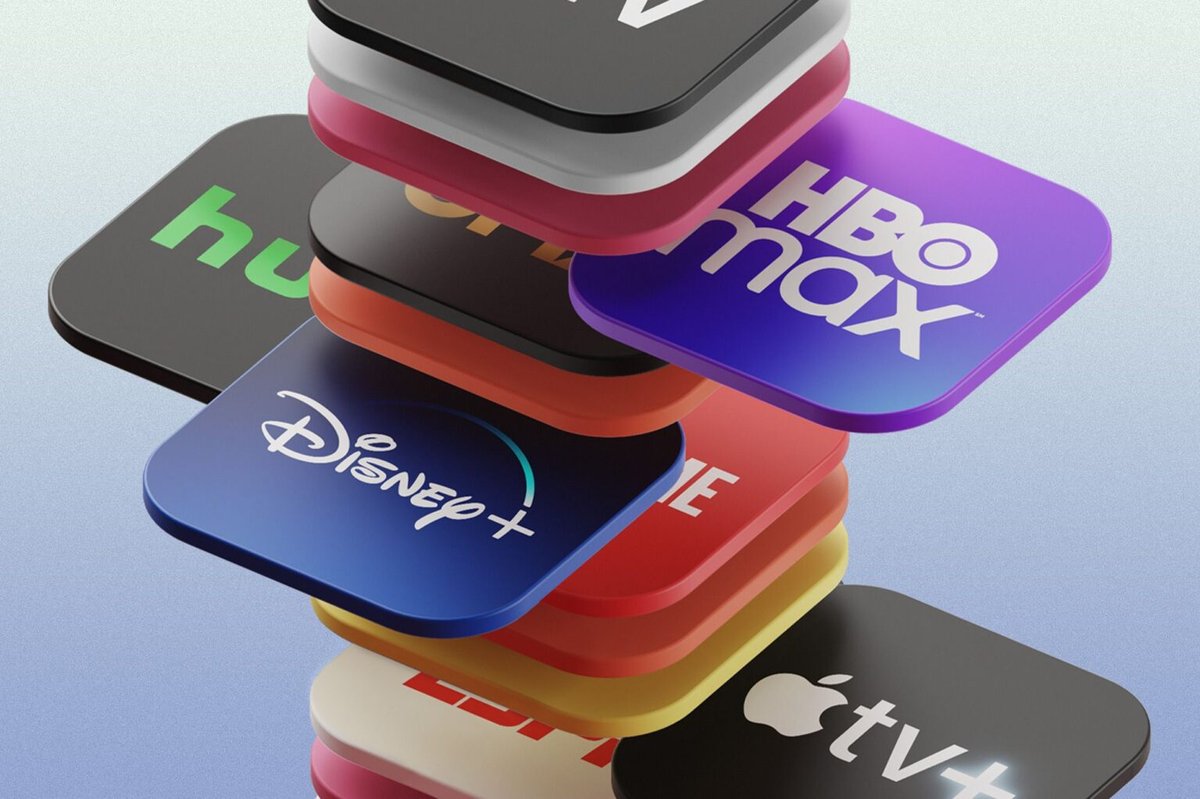
Remember the days of flipping through endless cable channels, wishing you could just pick the handful you actually watched? The promise of streaming was freedom: à la carte content, on your terms. But as the streaming landscape became a fragmented jungle of apps, subscriptions, and passwords, a new desire emerged. Today, The Future of Streaming Bundles and Service Mergers isn't just about saving a few bucks; it's a fundamental reshaping of how we consume entertainment, with telecom giants stepping into a powerful new role as central aggregators.
This isn't just a fleeting trend; it’s a strategic pivot for an industry that initially fragmented itself into oblivion. Companies are now looking at sophisticated bundles and strategic partnerships as the antidote to subscriber fatigue and high churn, while telecoms see an unprecedented opportunity to anchor their internet services.
At a Glance: What You'll Learn About Streaming's Future
- Why Bundles Are Back: Companies are using bundles to cut subscriber losses, reduce marketing costs, and gain valuable data, while you save money and simplify billing.
- Telecoms as Your Streaming Hub: Providers like Verizon and Charter are becoming central aggregators, offering streaming services alongside your internet and mobile plans.
- Different Kinds of Bundles: From integrated apps to combined billing from your internet provider, not all bundles are created equal.
- The Mergers are Real: Major players like Disney, Fox, and Warner Bros. Discovery are teaming up for niche services, showing a path to broader consolidation.
- Watch Out For: Content discovery issues within bundles and the fact that these aren't the "fat bundles" of old cable TV.
- What This Means for You: How to navigate the new landscape to maximize savings and minimize hassle.
Why Everyone's Bundling Up: The Driving Forces Behind the Shift
The initial streaming boom led to a paradox: more choice, but also more complexity. Consumers were drowning in subscriptions, leading to "churn" – the frustrating cycle of subscribing, canceling, and re-subscribing. This phenomenon, along with ever-increasing subscriber acquisition costs (CAC), lit a fire under content providers and distributors to find a better way.
For the streaming companies themselves, bundles offer several powerful advantages:
- Reducing Churn: When customers subscribe to multiple services under one umbrella, they're less likely to cancel any single one. It creates stickiness.
- Lowering Acquisition Costs: Instead of individually marketing each service, bundles allow for shared marketing efforts, reaching a broader audience more efficiently.
- Gathering Extensive Data: A bundled offering provides a treasure trove of anonymized data on viewer habits across multiple platforms, informing content strategies and advertising.
- Shared Marketing Costs: Spreading promotional expenses across several brands makes campaigns more impactful for less.
- Broader Appeal: Bundles, especially those incorporating ad-supported tiers, can attract a wider audience segment, including those sensitive to price.
And for you, the viewer? It’s all about simplicity and savings. Imagine one bill instead of five, and a discount that makes sticking with your favorite shows a no-brainer. Studies across ten countries show over 85% of respondents are interested in a single app to manage all their subscriptions. That's a clear mandate from consumers.
Take Disney, for instance. They're aggressively expanding their bundling options, including a new Summer 2024 bundle with Disney+, Hulu, and Max. Existing bundles already offer significant savings, sometimes up to 40%. It's a clear sign that even the biggest players see the writing on the wall. For those still wondering what's next for one of these services, you can learn about the Hulu shutdown and its evolution into a fully integrated part of Disney+.
The Aggregators Are Coming: How Telecoms are Seizing the Opportunity
While content providers are busy stitching together their own offerings, a powerful force is emerging from an unexpected quarter: telecom companies. They're not just selling you internet anymore; they want to be your central hub for all things streaming.
Verizon, in particular, is strategically positioning itself as a premier streaming aggregator. Their initiatives like myHome and +play are perfect examples. myHome integrates discounted streaming subscriptions directly with home internet services, mirroring the success of its myPlan mobile offering. Meanwhile, +play acts as a virtual marketplace, allowing users to manage and consolidate various streaming subscriptions from one easy-to-use platform.
This strategy isn't just theoretical; it's driving real results. Since its Q1 2023 launch, +play has contributed to a year-over-year increase in Verizon's gross postpaid phone additions, and myPlan garnered over 13 million subscribers in just six months. Verizon also offers compelling bundles for its wireless customers, such as a Netflix-Max bundle (both with ads) for $10/month (a 40% saving) and a Disney+ (no ads), Hulu (ads), and ESPN+ bundle for $10/month (33% saving). These examples clearly show how telecom giants are using their existing customer base and billing relationships to become powerful new players in streaming distribution.
It’s not just Verizon. Providers like Charter Communications are leveraging streaming to bolster their traditional cable TV offerings. They're bundling Disney+ and ESPN+ into premium TV tiers and have struck a similar deal with Paramount Global for Paramount+ and BET+ with Spectrum TV. This highlights the increasing leverage pay-TV providers now wield in the streaming ecosystem.
However, this increased emphasis on streaming through telecom channels also has a downside for traditional TV. The introduction of a stand-alone ESPN streamer by Disney by fall 2025, coupled with current streaming bundles, is anticipated to further accelerate cord-cutting. For telecoms, this isn't necessarily bad news; they can shift their focus to upselling higher-tier internet packages, cementing their role as essential service providers. The evolving strategy around services like Hulu, as previously discussed, also plays into these larger shifts, and it’s important to understand the Hulu shutdown in the context of these evolving aggregation strategies.
Deconstructing the Bundle: A Look at the Different Flavors
Not all streaming bundles are created equal. They generally fall into two broad categories, each with its own structure and implications for consumers.
Direct-to-Consumer (DTC) Bundling
This is when a single company, or a partnership of companies, offers multiple streaming services directly to you.
- Hard Bundle: This type of bundle integrates multiple streaming apps into a single interface, making it feel like one cohesive service. Think of Paramount+ and Showtime, where Showtime content is often directly accessible within the Paramount+ app. This offers the most seamless user experience.
- Soft Bundle: Here, multiple services are available under a combined subscription plan, but they still operate via different, separate interfaces. Disney+, ESPN+, and Hulu, for example, are often bundled together for a single price, but you still open three different apps to access their content. You get the billing simplicity and savings, but content discovery remains somewhat fragmented.
Wholesale Distribution
This category involves a third-party aggregator, typically a telecom or platform provider, offering streaming services as part of a larger package.
- Retail Aggregation: Services offered through a single provider with streamlined billing, often as add-ons. Examples include Amazon Prime Channels or Roku Channels, where you can subscribe to various services directly through their platform, managing all billing in one place.
- Broadband Bundles: Customers subscribe and pay for streaming services via a pre-existing phone, cable, or broadband provider. Charter Communications, for instance, adding a Disney bundle to its Spectrum TV service, is a prime example. This leverages your existing relationship with your internet or TV provider.
- Wireless Bundles: Promotional offers from mobile providers to add SVOD (Subscription Video On Demand) services at a discount. Netflix often comes bundled via T-Mobile, or as we saw with Verizon, specific bundles for wireless customers like the Netflix-Max package. These deals are often designed to attract and retain mobile subscribers.
Understanding these distinctions is key to evaluating the true value and convenience of any streaming offer.
The Hidden Hurdles: What Bundles Aren't Solving (Yet)
Despite their undeniable appeal, current streaming bundles aren't a silver bullet. There are still significant challenges that the industry is grappling with.
- Content Discovery Paradox: Many emerging bundles, particularly "soft bundles" and wholesale distribution models, fail to address the core integration issue. You still have separate apps, separate search functions, and often no unified way to browse or discover content across all services. This means the "streaming fatigue" is only partially solved; while billing is simpler, finding something to watch can remain a fragmented experience.
- Revenue Concerns for Content Owners: While bundles help reduce churn and acquisition costs, content owners may experience lower revenue per subscriber for individual services within a bundle. They trade individual subscription revenue for higher volume and retention. It's a complex balancing act that requires careful negotiation and a long-term strategic view.
- Not Your Grandparents' Cable Bundle: It's crucial to understand that these streaming bundles are not expected to revive the highly profitable "fat bundles" of traditional pay-TV. They are not "forced bundles" where you're made to pay for dozens of channels you don't want to get the few you do. Analysts like Ben Swinburne refer to this current phase as "streaming market repair," a necessary adjustment after the initial, unsustainable free-for-all. The goal is to optimize the value proposition, not replicate the old, often resented, cable model.
The impending introduction of a stand-alone ESPN streamer by Disney by fall 2025 further complicates the landscape. While it offers a new option for sports fans, it also represents another individual service that could eventually be part of a bundle, or contribute to further cord-cutting, compelling telecom companies to double down on upselling higher internet packages. The strategic decision around services like Hulu and its integration into Disney+ also reflects this ongoing "repair" and adjustment to market realities. The Hulu shutdown, for instance, is a pivotal example of how platforms are streamlining their offerings to better compete in this bundled landscape.
Service Mergers: The Bigger Picture of Industry Consolidation
Beyond simply bundling existing services, we're seeing strategic mergers and joint ventures that consolidate content power. The Venu sports-streaming service, a joint venture between Fox, Warner Bros. Discovery, and Disney, is a prime example. This unprecedented collaboration brings together a significant portion of live sports under one roof, directly addressing the demand for sports content in an increasingly fragmented market.
Why are these larger mergers and joint ventures making sense now?
- Combating Rising Content Costs: Producing premium content is incredibly expensive. Sharing the burden, or pooling resources, makes financial sense.
- Leveraging Brand Power: Combining the strong brands of multiple companies creates an undeniable draw for consumers.
- Competitive Necessity: In a landscape dominated by giants like Netflix and Amazon, smaller players (or even large players in specific niches) realize they need to combine forces to compete effectively.
- Creating Undeniable Value: Offering a "must-have" bundle of unique, high-value content (like live sports) is a powerful way to attract and retain subscribers.
This trend toward consolidation isn't just about content. It could extend to underlying technology, advertising infrastructure, and even distribution networks. As the streaming market matures, expect more strategic partnerships and outright mergers designed to create comprehensive, compelling ecosystems that are hard for consumers to resist.
Navigating Your Streaming Future: Tips for Smart Subscribers
The shifting landscape might seem complex, but it presents a fantastic opportunity for you to optimize your entertainment budget and experience.
- Evaluate Your Viewing Habits Regularly: Are you truly getting value from every subscription? Keep a running tally of what you watch most. This will help you identify which bundles make the most sense. Don't be afraid to understand the future of services like Hulu as you evaluate your choices.
- Calculate True Savings: Don't just look at the advertised percentage off. Add up the individual prices of the services you would subscribe to anyway, then compare that to the bundle price. Often, you're paying for one or two services you rarely use, which can diminish the real savings.
- Keep an Eye on Promotional Offers: Telecom providers and streaming companies frequently roll out limited-time deals. Stay informed about what your mobile or internet provider is offering; they might have a bundle you hadn't considered.
- Consider Aggregators: Platforms like Verizon's +play can genuinely simplify managing multiple subscriptions and often unlock discounts you wouldn't get subscribing individually. It's a central hub designed to make your life easier.
- Don't Be Afraid to Churn (Smartly): If you binge a show on one service and then don't watch it for a few months, consider canceling and re-subscribing later when new content drops. Just be mindful of pricing changes or bundle requirements.
The Road Ahead: What to Expect Next
The future of streaming bundles and service mergers is dynamic, and we're far from the finish line. Here's what you can anticipate:
- More Sophisticated Integration: Expect less "soft bundling" and more "hard bundling," where content from various services truly feels unified within a single app or interface. This will greatly improve content discovery.
- Personalized Bundle Recommendations: AI and data analytics will play a larger role in suggesting bundles tailored specifically to your viewing habits, rather than generic packages.
- Increased Competition Among Aggregators: As telecoms vie for the role of your primary streaming hub, expect even more aggressive pricing and innovative features from players like Verizon, Charter, and potentially others.
- Dynamic Pricing and Tiering: Bundles might become more flexible, allowing you to "pick and choose" a certain number of services from a larger pool, or to easily swap services in and out of your bundle depending on seasonal viewing habits.
- Long-Term Impact on Content Creators and Distributors: While this market repair is good for consumers, it also means content creators and smaller distributors will need to adapt, either by joining larger bundles or finding niche audiences willing to pay à la carte.
Ultimately, the shift toward streaming bundles and service mergers marks a maturation of the entertainment industry. It's an acknowledgment that convenience, value, and simplicity are paramount for consumers. The future isn't just about endless choice; it's about curated, accessible choice, delivered in a way that truly serves your viewing needs. Your relationship with your internet and mobile providers is set to become even more central to your entertainment experience.